April 23 , 2015
Wildlife, Wild Water
The most exciting matter in recent year is that more gardeners are growing for wildlife . Wildflower peepers love Native American blanket ( Gaillardiapulchella ) , but so do the bee . We’re maintain water , too , with native and adaptable sidekick . In this garden designed byRobert Leeper , gray genus Santolina on this hot check plays nicely with South American moss vervain and aboriginal Salvia greggii that attract mint of bee and butterfly . bee are cluster like crazy to Newe Ya’ar salvia . I ’m even seeing it on heavier grime , so I think I ’m going to try this culinary herbaceous plant at dwelling . In my garden , Gulf Coast genus Penstemon are HUGE this year — and a huge fan with bee . This workweek , see how nectar and pollen support diverse wildlife with Andrea DeLong - Amaya from theLady Bird Johnson Wildflower Center . She joins Tom to explicate how carbohydrate nectar provides exigent fuel , while pollen hold aminic acids and protein to feed baby bees . Although most butterfly stroke only go for ambrosia , the Zebra Longwing chows down on pollen , too . We run through all year and so do the wildlife . In spring , penstemons like Hill Country penstemon attract bees and hummingbird . Here’sP. cobaeain my garden , joined by heirloom , passalong Byzantine gladiolus . Late spring and summer native datura attracts dark - vanish moths and daytime bees . I ’m make purple Datura metel a try . Andrea explains why many of us do n’t have luck with fall - blossom bulb Liatris . But if you ’ve got the correct smear , like this front railyard prairie in Williamson County , transmigrate hummingbirds and Monarchs will love you!Salvias cater to muckle of customer : bees , hoverflies , butterfly and hummingbird . Plus , there ’s one for every season from spring through frost . Andrea explain how the cannular shape prevents nectar from washing out in rain , like on my spring - bloom nativeSalvia roemeriana . Many plants attract hummingbird , like spring - blooming Aloe maculata , here with bluebonnets ( that pull bee ) at the Rollingwood City Hall / Police station in a garden designed byLauren and Scott OgdenandPatrick Kirwin . Even though I grow native Turk ’s cap all over my garden , the light spot for viewing them is on the “ hedge ” of Turk ’s cap against my patio . My husband snag this characterisation one evening . We can supplement with tributary , too , but to do it right , John Dromgoolehas tips for you this week . Check outHummingbirds of Texasto rule out more!We also develop food for ourselves . Viewer Picture goes to DeWayne Nashand his wife who build clinker stoppage vegetable gardens at schooltime and this one at the Habitat for Humanity star sign in Williamson County . What bang-up volunteers!Although crape myrtle tree diagram are n’t native , their flowers do attract bees , wasp and aphids that feed ladybugs . But how do you cut them , call for David Slevin?Daphne excuse how , and applauds David ’s pruning of his young ‘ Tonto ’ crapes . Here ’s somegreat tip and drawing to prune bush and Sir Herbert Beerbohm Tree .
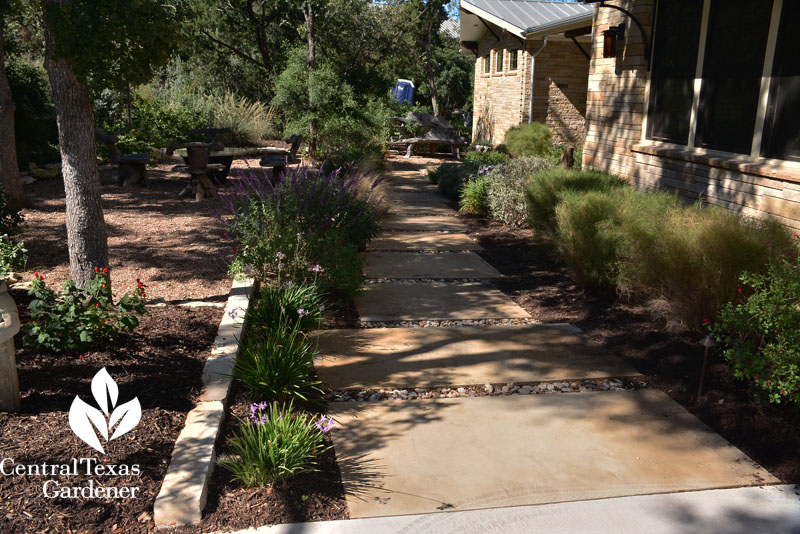
ask a native , drought defiant groundcover in deer body politic ? See how to grow Woolly stemodia(Stemodia lanata),Daphne ’s Plant of theWeek . Botanical Concerns ’ designer Annie Gillespie and associate Rachael Beavers cover a lot of ground with addled stemodia in this rocky hillside front grounds , our tour garden this hebdomad . For continuity on the other side of the driveway , they planted woolly stemodia along with artemisia , yucca , and four - spunk daisy and lantana for butterfly and pollinator . When Sandi and Bob Tomlinson built their 5 - Star Austin Energy Green Build home , they wanted to live outside , too . The garden design had strict guidelines to match , including limited imperviable cover and urine retention on the gradient that drains into Lady Bird Lake . After grading for patio and walkways in back , Rachael and Annie cover many spaces with crushed rock to settle in piss . Annie ’s water control starts in front . Rainwater rushing from the street filter through a gravel footpath to the back . There , it ’s directed to a dry creek bed . It all ends up in an 8 ’ wide , 4 ’ deep filtration trench . In front , Annie & Rachael not only slowed down water . They wanted to slacken down the walk through the garden to the front threshold . On this pathway , water sinks in , while textural plants meet the clean-living lines of the business firm . Annie and Rachael left the native shrubbery and trees for this serene front yard gathering dapple . There ’s so much more so take a look in good order now !
Thanks for stopping by ! See you next week , Linda

shred :