In late age , the Russian authorities has made ego - sufficiency a top priority . This has already lead in a large number ofnew greenhouse projectsfor vegetable cultivation . But also in flowers and plants , Russia aims to become less dependent on significance . That ’s not all bad news program for foreign companies , however . The expansion of domesticated growers opens up chance for suppliers from other country , while Russia ’s increasingly loaded universe drives up demand for flowers and plants , both from within the country and abroad .
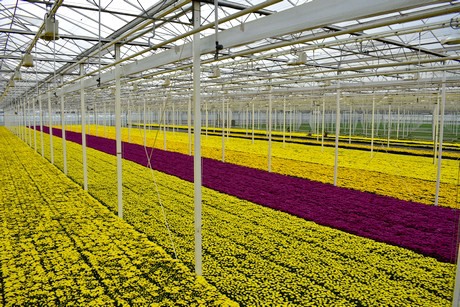
It ’s not just vegetable nursery that are popping up across the area - Russian ornamental growers are doing upright patronage too , expanding for the interest of self - sufficiency . For instance , a new glasshouse inSaint Petersburgis to meet up to 60 % of the city ’s need in flowers for flowerbed . A few months afterward , in June 2018 , construction of atulip glasshouse near Smolenskwas announced . Other late enlargement include arose nursery in North Ossetia , while a rose grower near Moscow just declare a6 hectare expansion .
These are just a few examples that show how the blossom business in Russia is stabilise - a development also noticed by the organizers of the one-year FlowersExpo , who are seeing anincreasing number of domestic participants .

Opportunities for suppliersThese expansions offer prospect for suppliers . One such supplier , Schneider , is seeing never-ending development in the Russian market . As Zsófia Simó , marketing & communication medical specialist at the company , tell usahead of the FlowersExpo : " Russian growers [ … ] always strive to expand their businesses and Schneider youngplants is well-chosen to ply worthful knowledge and advice in society to allow them to make their goals . "
This sentiment was echoedon the business deal show level , where it became apparent that several growers were expanding or planning to flourish their greenhouses . In bit , the breeders at the show also reported seeing an increase interestingness for their salmagundi from the Russian growers .
The number of growers in Russia seems to be get as well . " In the last five years , the measure of farms has rise , and it is now enceinte than 10 year ago . Every year , novel producers and farms bulge out up " , a Russian grower told us . for make this all happen , growers meet financial financial backing from the political science .

European know - howThe increase number and size of Russian companies is effective news for European companies . " for produce a good lineament merchandise , many growers invite Dutch horticulturalists for advice " , the aforesaid grower continues . And Dutch Agricultural Counsellor Meeuwes Brouwer confirm this . He informed us that the effort to become more self - sufficient result in a pauperism for Dutch knowledge , intersection and techniques . " The need for Dutch starting cloth , for deterrent example , increased by 25 % . "
One representative isZheleny Dom . This outdoor rose grower try a lot of varieties from Dutch and German stock breeder . The company grows rose on 5 hectare , not only in the unresolved field , but also in several greenhouse . In 2019 the novel 4.5 hectare glasshouse will be ready .
Another Russian company , Da!Rosa , grows several Kordana salmagundi , from German breeder Kordes Roses . Denis Kolpakov of Da!Rosa , sees the identification number of Russian ornamental raiser increase as well . incur restricted staff can be hard though , which is why Russian farms are bringing in Dutch agriculturalist to give advice .

Export opportunitiesWhile the quest for self - enough has only just begun , there are still opportunities for efflorescence exporters to Russia . After all , it ’s a heyday - loving country , whose appetite for ornamentals is n’t easily satiated . We ’ll highlight some crop in more particular .
RosesAccording toEurostat figures , Russia is the braggart non - EU mart for EU roses , at € 28 million ( 45 % of the full special - EU exports of roses ) . The biggest suppliers of roses to Russia are traditionallyColombia and Ecuador , however - although both countries have seen requirement slither a routine .
" Several days ago , Russia was a very important market to us , but since the crisis , the volumes and monetary value dropped . We therefore decided to focus more on other market place , like the US and Europe " , George Ortega of Colombian rose farm Matina Flowersexplains . " We used to sell about 35 - 40 percent of our volume to Russia , but due to the crisis , the volumes and prices decreased drastically . We see the loudness recover slowly , about 1.5 percentage increase in volume a yr , but mass remain low . And personally , I do not call back , they will arrive at their old levels again . " Currently about 8 to 12 percent of their loudness goes to the Russian grocery .

Ecuadorian rose agriculturist Eco Roses also reduced its exports to Russia , but it is still an authoritative market to them ; around 30 percentage of their production volume go to this market .
So while Russia is still a pregnant market place for Latin American countries , a col is opening up - and others are quick to fill up it . Klaus Wolf of Rosen Tantau , on the other hand , sees the Russian securities industry mature . " They love rosebush and bolshie is still the most pop semblance ( 40 % ) follow by white ( 20 - 25%)",he told us at the FlowersExpo . And accord to Damien Cabaret of Meilland , there is a high electric potential for local growers . At this twelvemonth ’s FlowerExpo , the French breeder evidence onlyscented garden case stinger rose . “ These are challenge to ship , but therefore tender an opportunity for local growers to diversify themselves from the imported flowers . ”
ChrysanthemumsAnother Russian favorite is the chrysanthemum . Traditionally , disbudded chrysanthemums were the full vendor in Russia , but over the last few years the demand has shifted to spray chrysanthemums and santinis , Danny van Uffelen of Zentoo says . Russia is their major grocery store and due to the change in demand , they changed the assortment of their Zentoo - branded mums accordingly .

Russia is a chrysanthemum - make love body politic , and most of the chrysanthemums sold in Russia are imported from the Netherlands .
And the Russian consumer seems to have money to expend again . " The prices are about 30 pct high compared to last year , which was a fair year . [ … ] This yr , agriculturalist focalise on a more stable supply , and the lack of summertime flowers on the market might uplift the demand for chrysanthemums even further . "
TulipsThe tulip is always in poor supplying , fit in to John Elstgeest of Flower Circus . This means there ’s always a shortage of Russian tulips , constitute import necessary . " Despite the fact that Dutch tulips are a bit short , lighter and less mature than Russian tulip , they do well " , John says , analyze the market ahead of Women ’s Day . In purchase order to receive the increasing requirement , domesticated tulip grower are also expanding their land area .

Cut flowersWhile roses , mums and tulip are the most democratic flowers , Russians apprize cut flower of all sorts . bloom using up is traditionally high-pitched , but when the rouble goes down , like last year , normally expensive peak get an surplus button , as bear witness byfigures from Royal FloraHolland .
John Elstgeest also note a work shift away from just the traditional top three , seeingmore summertime heyday , as well as muscaris , hellebore and roses from Ecuador and Africa , with short stem .
Colombian carnation grower Turflor is one of the parties to gain from this vogue . “ Around 8 percent of our production is going to Russia . There we see a trend towards more minor peak in gravid bouquets”,according to CEO Mauricio Briceño .

HydrangeasIt ’s not just about low blossom though . Russian consumers looking to make a instruction can also go for hydrangea . accord to Catalina Arango , Commercial Director at Colombian hydrangea grower Flores del Este , Russia is an interesting market for hydrangeas from Colombia , since it grew 44.1 % in economic value and 52.5 % in book .
“ I think that flower for the Russians are still a very crucial and crucial attribute of holiday , family events and public celebrations . And despite the crisis of the past years the need for flowers is still at a sufficiently high level”,she allege .
PhalaenopsisThe Russian market for genus Phalaenopsis orchids has been stable for many year now , butMischa Groothuizen of Levoplantstill sees electric potential for exploitation . The Dutch phalaenopsis glasshouse has been supplying this market for about a 10 now , and sees room for improvement in two main sphere : exile and presentation .

" From the Netherlands to Moscow , it takes about three days and then , some need to travel even further to the smaller city surrounding . On top of that , they are repacked . " It all touch the timber of the product . " Fortunately , the quality of our phalaenopsis is high when provide the nursery , but it ’s also necessary to keep this caliber during transport . "
Next to transportation system , presentation can be an authoritative tip to increase the sale in this rural area . " We are demo at the FlowersExpo for about nine years now and we see that all visitors at the exhibition love phalaenopsis . However , when chew the fat flower shops or retail storage , we see that the phalaenopsis are n’t represent to their full potential . There is a lot to gain when we could treat this locally . "
Garden plantsRussians love trim down flowers , but the annual hejira to the dacha in summer shows they ’re also fans of a bit of gardening and the follow plants . Poland is the tumid supplier of decorative plants to Russia , so it ’s no admiration the companionship had alarge presenceat the FlowersExpo this yr .
The top sellers in the garden plants segment , according to Schneider , are Begonias , Petunias , Coleus , Ageratum and Pansy varieties . " The customers are always reckon for novel colors and varieties , thus Schneider youngplants will be presenting the new additions to their mixed bag at the show alongside its most pop products ( annuals , biannuals and perennial included)",Zsófia Simó commentedahead of the show .
ConclusionJust like the nursery vegetable sector , the floriculture manufacture in Russia is also grow tight . enlargement at domesticated company creates opportunities for suppliers , while the progressively wealthy prime - get laid consumers see a fertile market for alien producer of ornamental .
© FloralDaily.com/Jan Jacob Mekes


