Putting a bulb in the ground that may not be viable leads to disappointment more often than not .
After plant , you eagerly await the beautiful flowers it ’s supposed to put out … but issue forth blush time , you might not have any .
We link to vendors to serve you find relevant products . If you grease one’s palms from one of our links , we may make a delegation .

If your sprightliness was a movie , at this gunpoint it would cut to a cinematically sad “ crying - in - the - garden ” montage .
For added dramatic effect , you would also rupture your garden crotch over your knee like a golfer after a miss putt , vow to never attempt this gardening nonsense ever again .
However , if you knew whether or not the bulb was good from the beginning , you could have save yourself the heartbreak of a failed time of year without flowers by simply avoiding planting any uncollectible I in the first position .
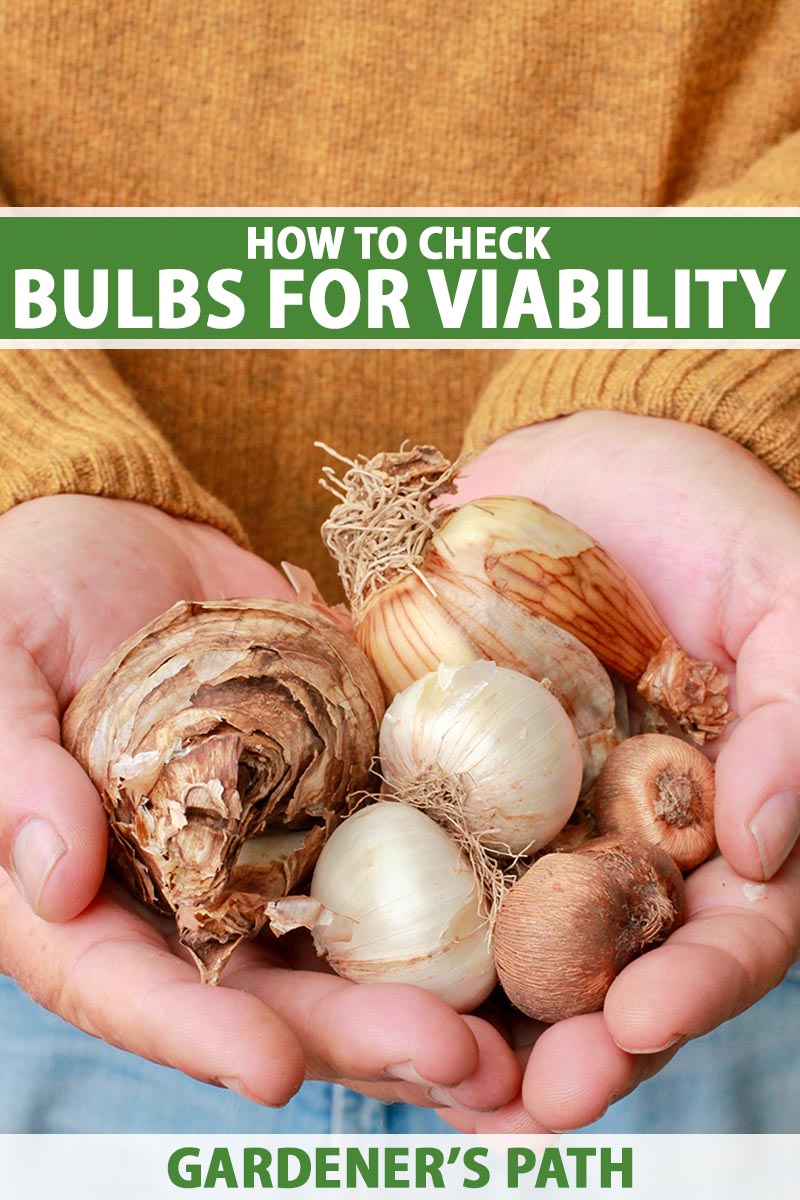
Andyou could have saved yourself from having to buy another garden ramification too !
Judging the viability of rootstock is n’t super complicated , gratefully . All it takes is a scrap of anterior noesis to start , and from there , your acquisition will only grow with experience .
This template will help you with the “ prior noesis ” part .

Here ’s what we ’ll go over :
What You’ll Learn
Flowering Bulbs 101
Botanically , a true bulb is an underground shank compose of layered , fleshy , and vim - storing scales .
It also admit a root - producing basal plate , a central shoot that produces flowers and folio bud , and lateral buds that produce “ bulblet ” offsets .
Tunicate true types such astulipsanddaffodilspossess a skin - like outertunicthat protect the scales , while imbricate types likeliliesdo not march this character of covering .

Prior to planting , imbricate varieties demand constant wet so their scales do n’t dry out and do irreparable damage to the developing flora within .
However , many folk use the Son “ medulla oblongata ” as a catchall to describe any bit of florawith an hush-hush structurethat stores energy for sleeping .
Such a definition is pretty unsubtle : it includes corms , tuber , and rhizomes as well .

Corms have a slender tunic but theydon’tform layered graduated table – just a mass of storage tissue paper . Corm - bring out flowers includecrocusesandgladoli .
Tuber lack a basal plate that shape roots and they do n’t form a tunic . Thecommon potatois a well - live genus Tuber , along withcaladiumsandanemones .
Rhizomes are laterally - growing stem that produce antecedent and shoots from nodes .

This makes it really well-situated for plants to spread horizontally – awing if that ’s desirable in your garden , less so if it ’s an trespassing species or something antecedently welcome that is now encroaching on other plantings in your flower beds .
Bloodroot , Snake River plants , and bamboo are all examples of rhizomatous plants , as well as species sleep with for their blooms such aslily of the valley .
For the saki of simplicity – and the fact that many nurseryman arise various flowering specie usually referred to this mode – I ’ll be touch on to all the above - described rootstock generically as “ bulbs ” from here on out .

Indicators of viability are the same for all of these , generally speaking .
As for viability itself , what we ’re looking at here is the ability of the rootstalk to grow and grow those much - loved flowers .
In a healthy dormant state , viable rootstock is awake and ready to grow – fall in the right conditions , it will emerge from quiescency and sprout after it ’s planted .

Signs of a Bad Bulb
Whether you ’re at the store making your selections for planting , or scrutinise existing bulb or ace that have been keep back in storage , the process here is the same .
When checking for viability , there are a few things to monitor and keep an eye out for .
More than one of these house can be present at the same time , and they can often mold each other as well .

Age , for example , can cause plants and rootstock to be more prone to infection , and pests may dish out as transmitter of disease .
If one or more of these sign are discover , then the bulb in question is not “ good ” or probable to be viable , and it should be pitched .
Rot and Infection
If a incandescent lamp exhibit augury of a knotted fungus or bacterial contagion , then implant it would belike be a dissipation of fourth dimension and energy .
It can also be dangerous for the other flora in your garden , as fungal pathogens and bacteria can easy propagate .
If you note soft spots , dark discoloration , black sclerotia , repulsiveness or a piss - soaked show , decay , and/or fuzzy mold , you may have a fungal or bacterial transmission of some kind on your hands .
septic rhizome should be disposed of as soon as you discover it , and your honorable course of activity may be to tap the whole lot .
Otherwise , you ’ll need to keep a close eye on any salubrious - looking ones stored nearby or purchased in the same parcel in face they attest obtrusive symptoms afterwards .
It plausibly extend without saying , but anything that ’s rotted from the interior - out wo n’t operate well in the garden , either .
Symptoms of rot include mushiness , dehydration , shrinkage , or even a funky smelling . But for foolproof rot sensing , try the bucket test .
Take the bulbs you need to quiz before embed and cast aside them in a bucket of water .
The impenetrable and healthy single will slide down , while any light , rotted - out ones will float . toss those before you plant the quietus .
Pest Damage
If your rootstock has been infested with insect or munched on by small mammals , then it likely wo n’t acquire very well , if at all .
Signs include feeding harm , discoloration , sunken bit , and/or tunnels created by burrow pests .
Toss the offending members of your unplanted hoard if you observe evidence of an infestation , and closely monitor or consider discarding any remain healthy - looking ones .
The bucketful test may also be used as trace above .
Old Age
Nothing lasts forever and a day … If a incandescent lamp is getting up there in years , it will naturally fall behind viability and eventually fail to bloom .
Most case-by-case bulb have a life-time or two to five years in the garden . as luck would have it , many types will multiply and spread readily , via hugger-mugger bulblets , genus Tuber , or rhizome that are produced to supersede the ones you constitute .
Any unplanted rootstock that has been in storage for more than 12 months probably wo n’t be viable , either .
direct to get yours in the basis quickly after purchase or at the appropriate time after storage . Depending on the variety , this may be in the tumble or in the spring after the threat of frost has lapse .
Tips to Prolong Bulb Health and Longevity
Congrats ! You ’re now equipped to filter out bad bulbs while selecting the healthiest rootstock that ’s most likely to be workable , which will economise you a lot of prison term and travail in the garden .
But shift a portion of your precious stemma can feel a sight like cuttingonions(which are also bulbs , coincidentally ): both activities are enough to make a person cry .
So what can you do to keep them healthy and sound off for longer ?
First and first , educate plants with these specialised underground depot Hammond organ decent in your garden .
Protect them from pest and disease , and put up them with the proper climate , sunshine picture , irrigation , and fertilization .
Tender fuck concern , both in storage and after institute in the reason or in a container , will acquire the best results , whether you ’ve planteddaffodils that have naturalized and spread , ordahlias with untoughened tubers that must be liftedand backpack away for the winter .
Not sure which varieties require lifting and storage throughout the coldest months of the year in sure regions ? Giveour ready to hand scout to storing bulbsa read .
And finally , be sure to clothe in high - quality bulb from the get - go , ones that are guaranteed to be disease - free and source from reputable nurseries .
Take a good feeling if you ’re shopping in person , and do n’t be afraid to give those bulbs a snuff and a squeeze !
Some phratry may already have their own preference , but for those look for recommendations , Nature Hills Nursery , Eden Brothers , andBurpeeare all solid vender with many pick to select from to engraft in your garden .
Become an Effective Garden Detective
Identifying sign of non - viability while keeping your stored bulbs new for as long as potential and being able-bodied to evaluate their worth prior to leverage will save you sweat , resources , and anguish .
Plus , being able-bodied to examine bulb and label their potential viability yourself is pretty coolheaded – you ’re on your way to developing piercing reflexion science that would make Jason Bourne bloom .
Discernment via sensory cues is a brawny , yet underrated gardening skill .
If this usher help to sharpen your power to discern whether or not some of the most pop spring- and summertime - blooming favorites are still honest to go at planting time , then that ’s a pretty big win in my book !
Has this article begin you jazzed aboutgrowing more flowers that sprout from bulbs , corms , and rhizomes ? Here are a few that I think you ’ll justlovegrowing at house :
© Ask the Experts , LLC . ALL right hand RESERVED.See our TOSfor more item . Uncredited exposure : Shutterstock .
About
Joe Butler
